
It’s been a while…!
The last time I posted anything on here was August – it is now November. As you have probably guessed, I’ve been rather busy.
September was full of prep for conferences, attending conferences, travel and then catching up with everything afterwards. In the first week of September I travelled to the SPPA Conference at Hill End in Oxford and had some fascinating conversations with Social Pedagogy practitioners from across Europe. Sadly, I could only stay for one day as I had to travel back for the HDRC Team Away Day, but that turned out to be rather fun!
I managed to lead/contribute to no less than three workshops at the HDRC National Conference and then the HDRC Housing Conference on 10th and 11th Sept. After that I was pooped, but grant deadlines wait for no-one, so it was back to the grindstone on those! I was also supporting a community researcher on her project exploring whether having a diagnosis of being neurodivergent impacts someone’s ability to access health & care services. This has been a fascinating, if somewhat time-crunched project, and there’s lots more we’d like to explore in the data.
The end of September and the bulk of October saw me working on three grant applications: two to the NIHR and one to Wessex Health Partners. One of the NIHR grant applications was closed down by one of the partners, so that left me with two grants: SCAFFOLD and AI in Adult Social Care.
SCAFFOLD is looking at reducing avoidable deaths from drug overdose. Currently, if someone has an overdose and an ambulance is called, they can often be stabilised at the scene. The individual being treated then has the option to be conveyed (taken to) hospital, where they might receive extra treatment and be referred to support services.
However, if they choose not to go to hospital, that’s it.
Job done.
Nothing else happens and there’s no follow-up.
This is due to GDPR laws and it’s something which really bothers Ambulance Services, Public Health teams and…pretty much anyone and everyone working in this area. SCAFFOLD aims to try and address this gap by doing a combination of work with people with lived experience, a Realist Literature review (what does the existing evidence tell us about what works for whom, when and in what circumstances?) and then piloting a new approach, which we think will involve a pro-active follow-up call to the overdose survivor 24-36 hours after the event. The grant application is a two-stage process, so we’ll find out in February 2027 whether we’ve been short-listed. Fingers crossed!
The second grant application is to Wessex Health Partners Small Grant Scheme looking at setting up a Community of Inquiry into the use of AI in Adult Social Care. This work is being linked up with the previous work I did on the IMPACT project which was looking at the same topic, but from a service users’ perspective. There’s a lot going on in this space at the moment, as you can imagine, so this work feels very timely. We will hopefully hear if we were successful in December.
So, now that those big pieces of work are under my belt, I have time to take a breath and think about what might come next…
*** *** ***
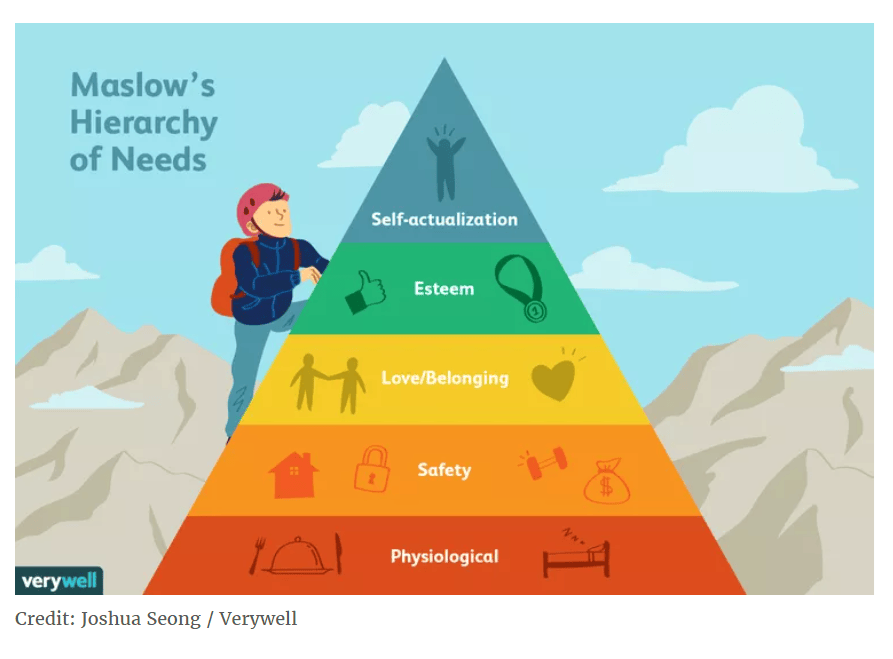
I had to put my work on Maslow’s Not Triangle on pause while I was tackling grant applications, but I’m due to have a coffee with the HDRC Director in a couple of weeks to talk about it. My colleague Emily, attended a workshop session where I was talking about it and she shared some reflections with me afterwards, which she’d authored with some help from CoPilot. I only got round to reading them today, but she’s come up with some really helpful and insightful observations and it’s really inspired me to come back to that work! 🙂
This is where the Perilous Checkerboard comes in, and I’m going to add to this metaphor with a movie classic: Indiana Jones and the Last Crusade.
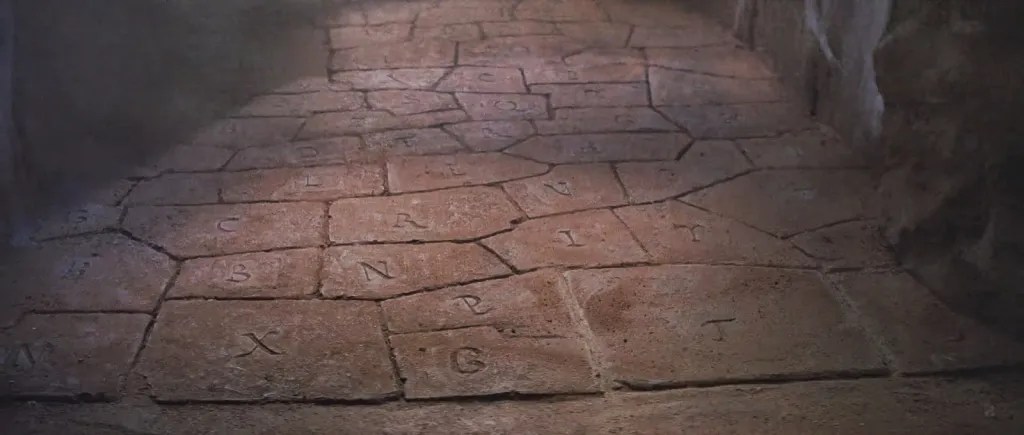
If you haven’t seen the film, then check out the trailer via the link above. It is an action-adventure classic! In the movie, they are trying to find a very special object (no spoilers!) and in order to do so, Indy has to complete three challenges, the second of which is named ‘The Word of God’. This involves travelling across a room covered in lettered tiles. To cross the room safely, Indy must step on the tiles which spell out a particular word. If he chooses wrongly, the tiles give way and he plummets to to his doom! (Can’t have an action-adventure movie without a healthy dose of peril and doom.)
I’m not exactly experiencing peril and doom (it’s only Tuesday after all), but I am mindful of the fact that I want to progress some of the ideas and projects I’ve been working on, but I’m not sure about how to do it?
I have an ambition to progress in my career and my learning. In my mind I envision this progression like crossing a checkerboard floor. If you look at the image at the top of this post it’s a fancy, less dusty version of the Word room in Indiana Jones. There’s even an inviting looking garden space that you can see just through the doors!
But like the tiled letter floor in Indiana Jones, I feel like there’s a ‘safe’ route I can take to cross the floor and achieve my aims – or a more perilous one. There are tiles which are safe and stable (these represent things I’ve learnt or already know) and there are tiles which look safe, but may actually lead me to plummet to my doom (these represent things I don’t yet know, or haven’t experienced).
And the tricky part is: I don’t how how to avoid the perilous tiles, because I don’t know what I don’t know.
I feel like I’ve encountered some perilous tiles recently: I went for an interview a few weeks ago for a part-time role which would have complimented my HDRC work really nicely but I didn’t get it. Lots of people who knew me were really surprised, but I guess the organisation got someone better 🙂 . I also shared my positive opinion on an event idea which a group of us were considering, but lots of other people disagreed or were very cautious. Nothing wrong with having a different opinion, but it felt to me like I’d stood on the wrong tile and my standing with these people was now in question*, because I don’t know the things they do, or didn’t come to the same conclusion.
Choosing to try and cross the room, to achieve my goals, involves risk, and whilst I understand that, I would really like to have the tools to be able to discern which tiles are safe and which ones aren’t. I don’t want to be so intimidated by the risk of failure (tiles falling) that I turn away and don’t try at all. But having tiles fall away beneath my feet is costly*, so having a guide or some support would be really helpful!
This in turn makes me think about when we work with community members to do research or engagement projects. There’s a lot of things that they won’t know or feel anxious about – there may be far more ‘perilous tiles’ on their checkerboard floor than mine, and a sense of far greater risk to people who are new to this space?
- How do we make sure they feel supported?
- How do we reassure them that ‘not knowing’ things is OK and we don’t expect unrealistic things from them
- Do we take enough time to explain how the checkerboard floor works (i.e. the journey of learning about and then carrying out research)
- Do we do enough preparatory work to help spot wobbly tiles and avoid them?
I guess in reality, all of us experience those perilous checkerboard moments, where we step out and the floor wobbles or falls from under us. Part of how we cope with that and recover from it (resilience) will depend on our previous experiences and also if/how we are supported at the time. I think this needs a bit more exploration, which I’ll probably look at in another post.
(However, I do also think that having a access to a Fedora and bullwhip can only help, surely?)
*I have ADHD and RSD is a big part of that which just makes things a bit trickier. It also links to Spoon Theory about the amount of energy it takes to do something or process something. Hence why the wobbly or falling tiles may feel more perilous or more costly.





Leave a Reply