
I have been reflecting on this post for close to two weeks now, turning it over and processing it in my mind. I’ve talked it through with a couple of people – including on a lengthy drive up the A3 and this is what I’ve arrived at:
Research and public involvement can be a lot like Pride and Prejudice.
(But with fewer posh gowns and fancy carriages.)
My thought process began after a meeting with some senior research staff. I’m not going to say where they were from, or what their roles were, because that will detract from the point I want to make. Suffice to say that some people in the room were a great deal more experienced and more senior than me.
I was talking through the work I do as a Patient and Public Involvement Facilitator: how the activities and projects I’m involved in link to the NIHR’s five Commitments for 2025-2030 as well as many of the goals within local NHS Trusts. I talked about the importance of building trust and relationships between community members and the research team and how much time it can take to do this well. I talked about my underpinning interest in researching social pedagogy and whether that might be a good fit as a methodology or theorectical framework for PPIE.
One of the senior people in the room asked me how much of my work was funded by grants, or had generated grant income? I conceded that we’d had small grants in to cover some of the projects, but some of it just came out of my own work time. I explained that engagement and building relationships was important and took time to do.
Another senior researcher asked what kind of training the Patient Research Ambassadors (PRAs) receive? (These are the volunteers who do such excellent work meeting clinicians and researchers and giving feedback on their studies before they go live.) I explained that we don’t offer specific training to PRAs because we want them to come with their lived experience and there’s a danger that formal training actually moves someone away from being ‘an average person on the street’ to an ‘expert patient’. An ‘expert patient’ is someone who has learnt so much about the research process that they could be a researcher themselves! And to be fair, the longer you spend doing this work as a public contributor, the more you will inevitably learn and pick up through the various meetings, emails etc that you take part in. The danger here is that the more knowledge someone acquires, the less they might be able to relate to or remember the experience of being the ‘average patient’ who might know none of these things.
“Ah yes, the ‘expert patient dilemma’, I get that,” one of the researchers replied. “But don’t you think they’d be more useful if they had at least some training and then they could contribute better to the research design process?” The first senior researcher agreed and went on to talk about their frustration when public contributors didn’t even know what a protocol was, or the process for an ethics application.
“We need them to at least know what these things are, so that they can be more effective in helping us secure grant funding.”
Something about that phrase really jabbed at me, but I couldn’t figure out why at the time. I explained about the importance of ‘holding the space’ for people with different backgrounds and experience. I explained that public contributors know things we don’t and therefore their contributions are valuable and worthwhile. I explained that we as researchers are just one element in a public contributor’s universe of other concerns, responsibilities and interests and that we need to respect and value what people are able to offer us. “Some PRAs or public contributors might be interested in getting further training and learning new skills, and I’d totally support that,” I said, “But I wouldn’t make it a requirement. People need to be able to engage on their own terms and we need to be able to offer a range of opportunities and flexibility.”
The conversation went on, and I continued to explain my approach and while inwardly reflecting that whilst the researchers were talking about the need for training and upskilling of public contributors, it was probably the researchers who needed training and that there needed to be some work on managing expectations on both sides. Interestingly, the Bournemouth PIER Partnership (Public Involvement in Education and Research) was set up to train public contributors but in actual fact they’ve found it far more effective and impactful to train researchers on how to work with the public.
At this point in the story, I’m going to take a short detour…
Several years ago I went to university and qualified as a teacher. Although my training was for 7-11 year olds, I’ve actually had the opportunity to work with every age group, from babies aged 6 months where I was teaching Baby Signing, right the way through primary, secondary, college and university age groups. In each setting there was a unique group of individuals and within that group they all needed slightly different approaches, depending on their own learning styles, literacy, emotional health, communication skills etc even if they were all being taught the same topic.
One of the things I was most aware of was that, as a teacher, it’s my job to give things away. By that I mean: as the adult or the most qualified or experienced person in the room, I possess knowledge or skills which the others in the room do not. My role is to find the best way to share that knowledge so that they will then own it and can use it for themselves. I might have decided on and prepared a particular way to do this (i.e. a lesson plan), but there will be some people in that group who don’t get it, or struggle to understand what I’m saying. As someone who already possesses that information, it’s my responsibility to find another way to share that it and if that doesn’t work, to try something else, until they do. If they don’t get it, that’s not their fault – after all, I’m the one with the knowledge in the first place. The onus and the power to make that change and enable someone to learn something new is on me.*
So when it comes to public involvement and research, I’m keenly aware that I hold knowledge (and therefore power) which others in the room may not. I have access to and the opportunity to use that knowledge in a way which can benefit others, or demean them. To empower** them or segregate them.
And I think it was that sense of power and misaligned expectation which really fuelled my anger and disappointment as I left that meeting and walked back to my car. I texted a close friend who also works in research in a different organisation, to ask if I could vent/process about the meeting. Moments later my phone rang and we spent almost 20 minutes bouncing back and forth about the meeting and how I was feeling about it.
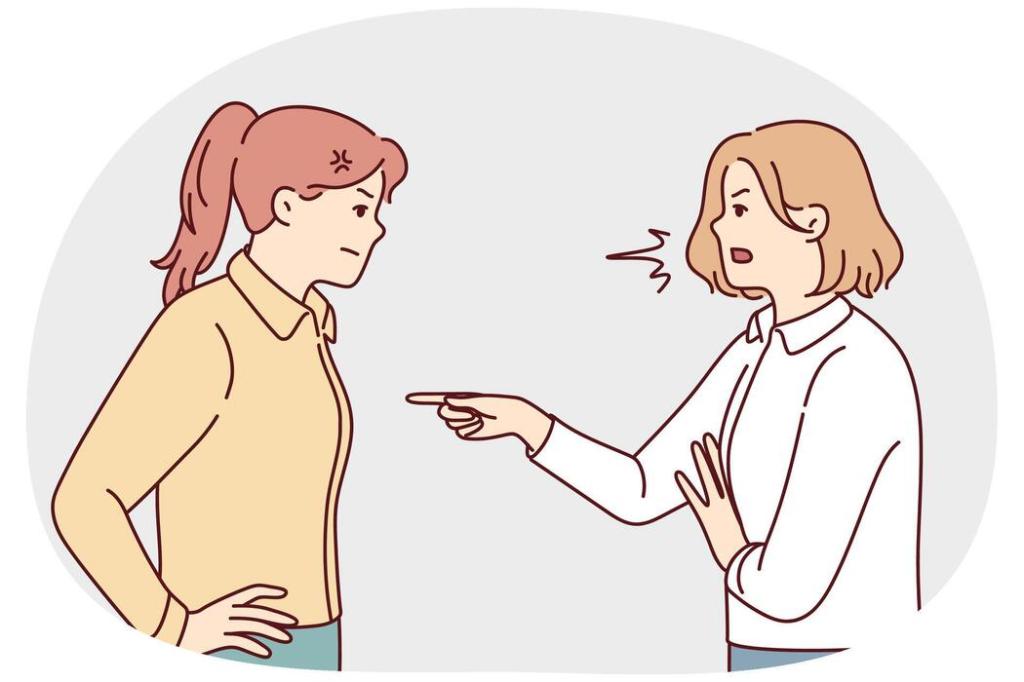
“It was so condesceding and patronising!” I railed. “They wanted public contributors to be trained so that they’d be more useful for the grant application process and so that they could get public contributors to co-write the bid and the the paperwork. But what about what public contributors want? How is it meaningful for them? What if they don’t want to do that? This kind of thinking completely devalues what the public can bring into research!” My friend agreed and explained that there are still a contingent of researchers who seem to view public involvement in this way: it is a resource. An essential but perhaps unwieldy tool to get the job done i.e. submit grant applications.
As we spoke, I reflected that there’s something in there about the perception of what public contributors can bring to the process – namely that if researchers don’t hear the key words or terms they’re used to, being used in a meeting, are they inadvertantly assuming that the people in the room don’t understand the topic properly and therefore what they have to offer is somehow substandard or lacking? (This is where the role of a PPI Lead is so vital as someone who translates and interprets meaning in a PPI meeting and in wider community settings.)
The trouble is, that’s like listening to someone who isn’t a native English speaker and assuming that their actual understanding is equivalent to that of a primary school child, because those are the sentances and grammar structure they’re using. In actual fact that person is working twice as hard to translate something they’re familiar with into a language where they have fewer words – but they still manage to make their meaning understood.
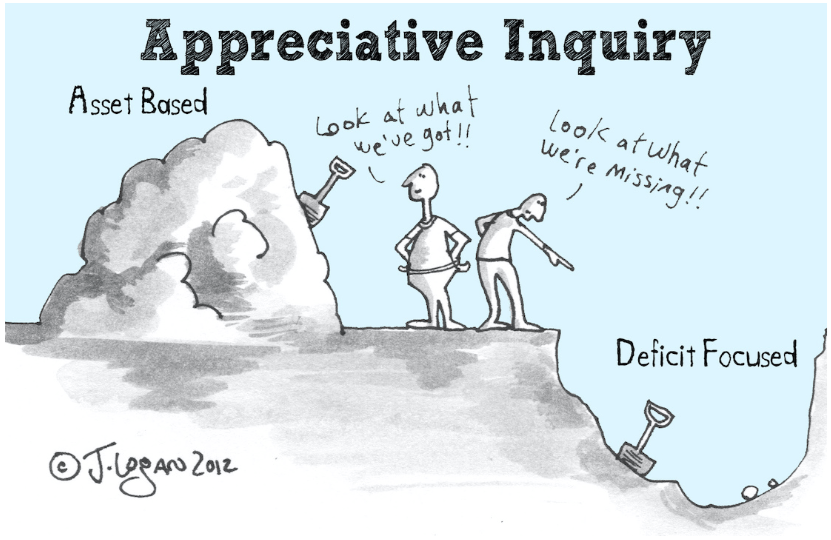
So there’s something about the perceived value of someone else’s experience, which gets lost in translation because the expected words aren’t being used – the implication being perhaps: “You don’t know as much as me because you don’t use the same words as I do.”? But for me that’s where the condescension comes in, and I find that really challenging. My values and beliefs drive the way I work and my starting point is to assume that everyone I meet has worth and value and something useful to contribute from the very beginning; not just after they’ve had training or spent six months in PPI meetings.
I also have the sense that this reflects some of the heirarchical and parental dynamics of the relationship between Doctors and Patients, where the Doctor assumes the role of parent: possessing knowledge and thus authority whereas the patient adopts the role of the child: having less knowledge or competance and thus deferring to the Doctor. This may be partly due to the training our medics receive, or partly down to the individual, I can’t really say. The WHO (World Health Organisation) picked up on this recently and it was highlighted in an article in the British Medical Journal about the importance of including and valuing the patient’s role in healthcare decisions.
The important part in this Doctor-Patient relationship dynamic is that even with this medical knowledge imbalance, there are some Doctors who do understand that their patients possess knowledge which they don’t. This is different knowledge, but it’s no less valuable. This knowledge could be about the difficulties in linking up different services, patient-reported outcomes (side-effects after surgery or following certain treatments which aren’t as widely known) or what happens for this individual when they take certain medications.
These practitioners are a joy to work with, because they come with an open mind and the expectation that there’s something for them to learn from a partnership with patients, carers and members of the community, which can help them improve their practice and care for patients. The atmosphere in the meeting or focus group is an open and positive one; people engage willingly and often with frank honesty about their personal circumstances and experiences, because they know they are being valued. They are contributing to the improvement of the NHS through their own lived experience (positive and negative) and everyone benefits.
It’s different knowledge, but it’s still valuable.
Public involvement is a requirement in research grant applications, and funders are putting more emphasis on PPIE and are less willing to accept a wishy-washy statement such as: “Patients were approached about the study and they were happy with what was proposed”. They want to have more detail about what was discussed, the questions public contributors raised, and what the study team has done as a result of that? This means that PPIE work is becoming a more visible and integrated part of research development, which is good. But it also means that if I encounter a researcher who puts less value on PPIE, or doesn’t understand the value of what’s being offered because it’s not presented in a certain way, there’s more likely to be friction or substandard engagement work because they don’t understand why it matters. Again, the article in the BMJ illustrates this:
“Working with patients as partners is an aspiration for many individuals and institutions. But despite an ethical imperative, many examples, and growing knowledge of how to meaningfully work in partnership with patients and the public, good practice remains patchy…the value of patient partnership remains hard to quantify. James Munro, chief executive of Care Opinion, says that staff view patient feedback as something that should be done, although they often think it is of little tangible use.” (doi:10.1136/bmj.q1243)
This brings me back to my experience as a teacher: as someone who possesses knowledge, it was my role to make that knowledge accessible and find ways to give it away. I have more resources, skills and experience, so the onus is on me to create the conditions for those with less skill/knowledge/experience to be able to meaningfully contribute. Thus in my mind, experienced researchers who have greater skill/knowledge/experience in research should be making more of an effort to engage with public contributors on their terms, rather than expecting public contributors to do training, learn the appropriate words and thus make the researcher’s life easier. Otherwise there is a real danger that some researchers and medics may only consider PPI valuable or impactful if it is presented in terms which they are familiar with.
It’s taken me over two weeks to roll this over in my mind and gently disentangle all the threads and layered implications of the things some people said in that meeting. I would like to absolutely reiterrate here that I have worked with some outstanding researchers and clinicians, who value patient partnership and have adapted their approach to make the best of this invaluable pool of knowledge. I also appreciate that what I have interpreted may not be what the people in that meeting intended, or even realised that they were saying, but these are attitudes I have encountered more than once, and it simply underlines for me the importance of having a methodology or philosophy for public involvement which starts out with valuing people and then moves on to the conditions and approach for enabling those people to contribute in a way which is meaningful for them. Anyone working in this field already knows this, and does their best to enable these things to happen. But if you’re someone who only views people as worthwhile when they contribute on your terms and in a way which is easier for you, then it can make this work very challenging and at times demoralising.
So where do we go from here? This certainly isn’t the first time that someone in a public engagement role has expressed frustration at how public contributors and their work is perceived, and it probably won’t be the last. However, I am reminded that the tide is turning (albeit very slowly at times!) and that change is underway. At the recent ENGAGE conference in Bristol, one of the keynote speakers Steven Hill, the Director of Research at Research England, reminded us that over the last 10-15 years we have travelled a long way. PPI used to be viewed as an odd or unusual thing to do, whereas now it is widely known across different research domains. And whilst the aspirations and delivery of public engagement is still patchy, it continues to grow and become more embedded in research design and delivery. There might be prejudice in the research world, but we as public contributors and engagement facilitators take pride in what we do, and we will keep persisting in working with and winning over researchers, medics, clinicians, academics and practitioners in all fields, because we know how valuable this work is and what a difference it can make.
*It’s absolutely fair to say that a students’ attitude to learning will have a big impact on their ability to learn, but there’s a lot to be said for a thoughtful and tailored approach to teaching.
**Empowerment is not about me ‘giving’ someone power; it’s about me choosing to recognise the power and diginity that the other person already has.



 Authentic PPIE - the (re)search for authentic engagement
Leave a reply to Peter Leonard Cancel reply