
Ok, this sounds a bit odd, but it’s literally just hit me: in order to work well with people with lived experience then it helps if you have lived experience of working with people with lived experience. (We’ll call it LX from now on, because I’m going to mention this phrase A LOT.)
“Apart from that opening paragraph sounding like a poorly designed tongue-twister, what on earth is lived experience?” I hear you ask.
Well, in research settings, social work and social care settings and pretty much any space where you work with members of the public in some way, this is how we describe someone from the community* who has knowledge about an issue or a health condition from first-hand experience. They might be a client, a patient or a research participant.
*This is an important distinction, because actually we all have lived experience of all sorts of things, but here we’re making a distinction between a professional (and therefore someone with power or agency in a particular setting) and a non-professional e.g. a patient.
The mental health charity Mind describes LX as:
Lived experience is the knowledge and understanding you get when you have personally lived through something.
Let’s unpack this a bit more: I can say that I have lived experience of asthma, because I have been diagnosed with asthma and I’ve had it most of my life. I know what my symptoms are and I know how it can affect me. I take regular medication to manage my asthma and on the whole, it doesn’t affect my life too much.
But – I do not have lived experience of COPD (chronic obstructive pulmonary disease.) Although they are both respiratory diseases – that is, they affect how your lungs and breathing work, they are not the same. Even though some of the symptoms are similar and the medication might be similar ( for example people with asthma and COPD both use inhalers), they are two distinct and different diseases. I do not have lived experience of COPD. Also, my asthma is fairly mild and well-controlled, but I do not have severe asthma and have never been admitted to hospital because of an exacerbation (an asthma attack). So my LX is similar to some people with asthma, but not everyone.
Ok, so that all sounds fairly straightforward doesn’t it? You know what you know because you’ve lived with it or through it…and therefore you can’t know what it’s like to live with something, or have experienced it, if you haven’t. That all sound fairly sensible.
But here’s where it gets interesting: what if someone knew a lot about asthma – using my original example – because they’d studied it a lot, but didn’t actually have asthma themselves? Someone like a medic or a nurse practitioner who knows a lot about asthma because they’ve been taught about it in a lot more detail – arguably more than me? It’s fair to say that even though the medic doesn’t have asthma, they do know a lot about the technical, biological and mechanical aspects of how it affects the body.
In which case, whose knowledge is more important, or more relevent? The technical knowledge, or the experiential one? And if those two different knowledge sources seem to clash, which one should take precedence? Which one is more important? If it’s a conversation between a doctor and a patient and the doctor says: “This medicine should be working well for you – if it’s not working then you’re not taking it properly,” and the patient replies: “But I am taking it properly – and it’s still not working like it should?” then who is right?
In a lot of cases, because of the way in which the patient-doctor relationship works, we tend to defer to the doctor because “they’ve been trained and they must know best”. Sometimes they do, and sometimes they might not. (This relationship dynamic is something I’m going to explore in another post.) But, each person is an individual, and as we’ve learnt over recent years, our individual genetic make-up can have an impact on how effective medical treatments can be. An increasing number of medics these days are better at listening to and taking account of someone’s LX (lived experience) and will work to tailor their treatment accordingly.
But some medics are not so good at listening and this can do untold harm…I’m thinking here about patients with myalgic encephalomyelitis or ME as an example, whose symptoms can be very varied. Some people recover well with mild, graded exercise, but for others with the same diagnosis who also experience post-exertional malaise or PEM, too much activity can send them into a ‘crash’ days or even weeks later, resulting in worse symptoms and a longer recovery time. (A crash is when their mental and physical capacity is completely drained and they are overwhelmed with exhaustion and may have symptoms of pain and headaches.)
I don’t believe it should be a battle of ‘who’s right and wrong’ when it comes to healthcare, or any other kind of social support service. I think clinical and academic knowledge has a lot to offer, but so does lived experience. LX is the space where the academic and the theoretical meets the reality of everyday life. This is the space where those conceptual ideas, which have been tested in controlled conditions, are now really tested, in the messy, unregulated, haphazard reality of Thursday afternoon…Brenda’s living room…Sunny Days Care Home…the local supermarket or working at the Rainbows Nursery.
One of the best examples of this I ever heard, was of a PhD student working with First Nation people in Canada. (First Nation is a term used to describe indigenous people who lived in Canada before colonisation and white settlement). The student was working with a group of First Nation women and they wanted to improve their health and exercise opportunities. After that discussion, the student went away and had a brainwave about what they could do! She spent her budget on good quality running shoes and pedometers and came back to the group to explain her idea:
“OK, so I’ve come up with a way for you to do exercise which doesn’t cost a lot of money and doesn’t rely on going to a gym and you can do it any time of day…You could go running!”
They looked at her. They didn’t look convinced.
“Around the reservation…” she continued. “You could go running together to improve your fitness. It’s free, you can go at any time you like and build up at whatever pace you like…I got you these shoes and pedometers so that you can track your progress…” The group still didn’t look convinced.
“We can’t go running round the reservation,” one of them said solemnly.
“Oh,” said the student, slightly perplexed. “Er, is there a burial ground or some kind of rule which says you can’t go…I mean we could limit it to certain areas or…”
“No,” the woman shook her head. “We can’t run around the reservation.”
“But why?”
“Because there are wolves and bears out there!” the woman replied, somewhat exasperated. “We’ll get eaten!”
Taking account of LX and weaving it into your research study or service delivery can make a huge difference to how easy it is for people to engage with you, and how successful your proejct might be. To give you another example: there were plans being made for a new Children & Families centre in Portsmouth, where I live. Portsmouth is a densely populated city on an island roughly 5 miles long and 3 miles wide. It has been described as a ‘northern city on the south coast’ and as ‘an island full of villages’. What this means is that people have a very strong sense of identity drawn from their neighbourhood, even if they don’t know their neighbours very well, and a good percentage of people born on the island, will live within a couple of miles of their family.
There were several community meetings to decide where the new centre would be, and it came down to two choices: one near a block of flats and the other on a local primary school site. The residents chose the school site, even though it was smaller, because they said “No-one from here goes over there; the crossing is too far away and the road is too busy. If you put it over there, no-one will use it.” It seems absurd to build a community space on a site with less room just because no-one would cross the road, but local residents were clear about their experience of living in the area. The City Council listened, and the new centre was built on the school site. It has been well used and is woven into the fabric of school life.
So, hopefully I’ve been able to explain that LX is important because people with LX often have knowledge and insight which professionals might not and they can offer context-specific information which can help ensure the success (or failure) of a project or study.
Now right at the beginning of this post I said: “In order to work well with people with lived experience then it helps if you have lived experience of working with people with lived experience.” Professionals can sometimes make the mistake of assuming that because they’ve had training and they know certain things, that their knowledge is more important or more valuable than someone else’s – such as their patient or client. But I would like to remind professionals (myself included) that people with LX know things you don’t. They know how hard it is to get an appointment in the first place. They know how long it takes to be taken seriously and for their needs to be listened to. They know how hard is is to live on a very limited income, or with a life-limiting illness, or to be a carer for someone who is housebound or who has dementia.
They know things you don’t. And that knowledge should be valued and respected as much as yours.
It’s never just about the technical knowledge or the academic papers or qualifications. It’s about how that knowledge is applied and adapted to a real-world setting, where very few things end up working the way they should…
There is a phrase* which is becoming more common now, which is ‘expert by lived experience‘ and I’ve seen it used in training sessions for NHS staff, to help them understand the LX of patients living with long-term or serious conditions, such as heart disease or cancer, or neurodivergence such as autism. The fact that these people are willing to share their personal experience with people they don’t know, is incredibly brave, but also incredibly useful. How else would we know what it’s like to deal with life as a carer for someone with Parkinson’s disease?
*As a side note, I’ve also heard the phrase ‘living experience’ because it’s something which continues to have an impact on people’s lives. You may have recovered from heart surgery, or no longer be living with domestic abuse, but those experiences will change you irreversibly, even if they’re not happening anymore. But that’s a post for another time…
My experience of working with people with LX is that it’s very humbling and incredibly helpful. In that setting the roles are reversed: I’m not the expert, they are. I don’t need to know the answers to things, or work out how to solve the problem, because they’ve already done it. The more time I spend working with people with LX, the more I can see the benefits of collaborative working, because people with LX bring new ideas and perspectives to the table, which I wouldn’t have thought of, because I haven’t been there…
“But what do you do if you’ve never worked with people with LX?” you say to me. “How can I get experience if I’ve never had experience?!”
That’s a fair point, so here are some things to bear in mind:
- Try not to ‘other’ the people you meet. They might have different LX to you, or have a different accent or different colour skin, but they are still a person and you are a person too. We often have more in common that we think, so look for the common things you share, rather than the things which are different between you.
- Be respectful and treat people in the same way you would like to be treated. Showing respect to others often generates respect in return, and courtesy triggers courtesy (just like grumpiness triggers grumpiness in people – you just have to think about your Monday morning journey to work to find an example of that!)
- Be patient and make sure you take time to explain things clearly – and time to listen. If you’re the one who’s spent six years studying a topic, you can take a few minutes to find ways to explain it to someone else – and if you can’t explain it in simple words, then you have a problem!
- Don’t make assumptions about what people might know – you might be surprised (and possibly embarrassed!!)
- Ask questions (politely!) You can shift the power-dynamic and learn a great deal at the same time, if you position yourself as the learner, rather than the expert: “Can you help me understand why that’s important?”. “I haven’t heard of that before, can you tell me what it means?”. “I can tell that that was important or significant for you – would you mind telling me a bit more about why that is?”. “Am I missing anything important?”. “You’ve said that’s not going to work – can you explain why you think that?”.
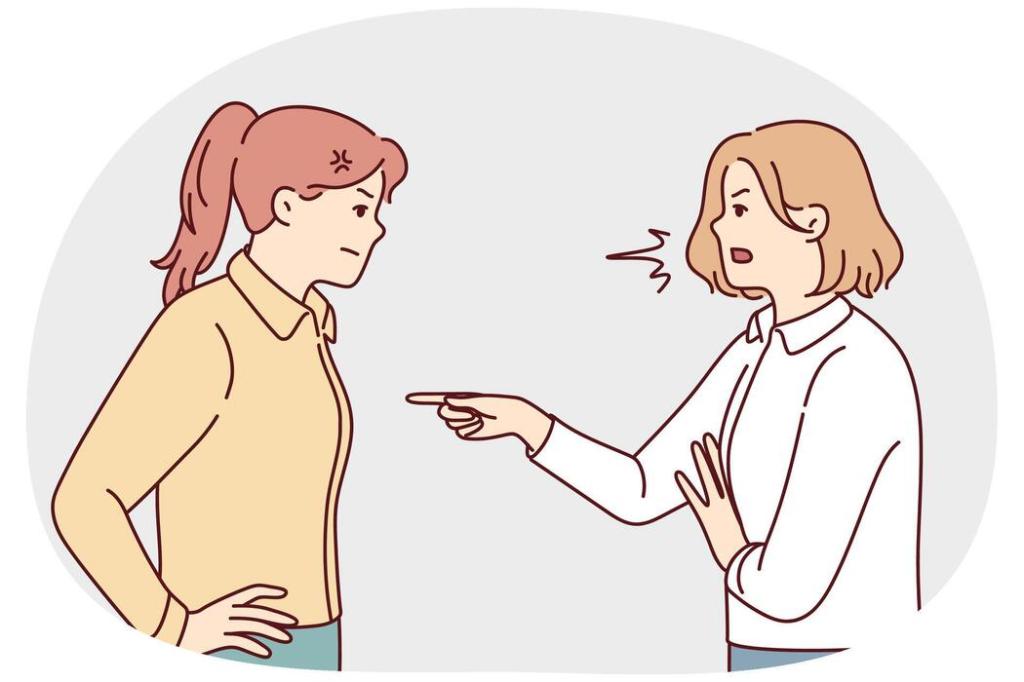
There’s lots more to say on this topic, such as how to handle conflict or confrontation, and how to build rapport and empathy by allowing a bit of a blend between the professional and personal spheres, but they need some space of their own, so I’m going to pause this blog post here.
I’m interested to know what you think? Has anything in this blog resonated with you? Has anything challenged you? Have you heard it all before, or is some of it new?! Send me a note in the comments, as I’d love to hear from you!




 Authentic PPIE - the (re)search for authentic engagement
Leave a reply to Changing direction, or broadening the scope? – Authentic PPIE – the (re)search for authentic engagement Cancel reply