Well, it’s been a busy few weeks, I can tell you!
After nearly 7 years, I have moved on from my role with the Research team at Queen Alexandra Hospital as a Patient & Public Involvement Facilitator and I’m now working with HDRC Portsmouth as a Research Facilitation Lead. I spent my last 3-4 weeks at QA working hard to get things in place for my volunteers, the Patient Research Ambassadors, and making sure that everything was as neat, tidy and findable as could be! I had a few days off before starting my new role on Nov 5th.
My induction into the new role has been intentionally gentle, to give me time to meet people and get settled in a new space. I have been used to working at a different pace, so whilst I appreciate the change of speed, it’s a bit unsettling…my ADHD brain is thinking that I should be more ‘busy’ – although as I reminded myself in a LinkedIn post recently ‘busy isn’t the same as productive or useful’. I’m sure that I’ll miss this slower pace once the projects start rolling in!
In the meantime, in-between mandatory training, introductory meetings and getting up to speed on Public Health agendas, I’ve been exploring possible routes for doing a Masters or a PhD(?!) I’m still interested in developing research in the area of public involvement and Social Pedagogy, but I’m now including the spheres of healthcare research, academic research and public involvement work in local authorities. I believe the core components are the same for each setting – it’s just the context which is different.
I’ve heard about a potential funded PhD opportunity with Northumbria University, where they are exploring how Restorative Practice can be used to effect culture change. Gill Danby led a research project with Kirklees Council which is the 13th largest local authority in the UK in terms of population. In 2017 their Children’s Services’ were rated Inadequate. An Improvement Plan was initiated and they formed a partnership with Leeds City Council. They were exploring the implementation of Restorative Practice for the dept, but the Executive Team endorsed Restorative Practice for whole organisation.
The research team, led by Gill, spent some time working to understand what kind of impact the adoption of Restorative Practice had had on the culture of Kirklees Council. Their findings, presented at the Restorative Justice Council Annual Conference on
17th November 2025, told a story of successes and challenges, which I’ll come on to later.
You might be feeling a bit confused at this point, thinking “She’s been all about Social Pedagogy all this time – what does Restorative Practice have to do with anything??”.
Well, it might help if I explain that Social Pedagogy, Relational and Restorative Practice and Human Learning Systems all connect as similar approaches to person-centered, values-driven work. Social Pedagogy begins from an academic and practice-based approach; Restorative Practice begins from a Justice perspective and Human Learning Systems seeks to implement these things in the context of Public Services. I am still interested in researching how we could apply Social Pedagogy to public involvement practice, but that’s precisely because of the restorative social justice thread that you find woven through its approach. The two disciplines are complimentary.
I’m not sure if I’ll get any traction with the PhD opportunity, but there’s no harm in pushing the door and seeing if it will open? 🙂
Ok, so you’ve explained the new job and the goal-setting; that’s all good. Where does Bake Off fit in?
I’m so glad you asked!
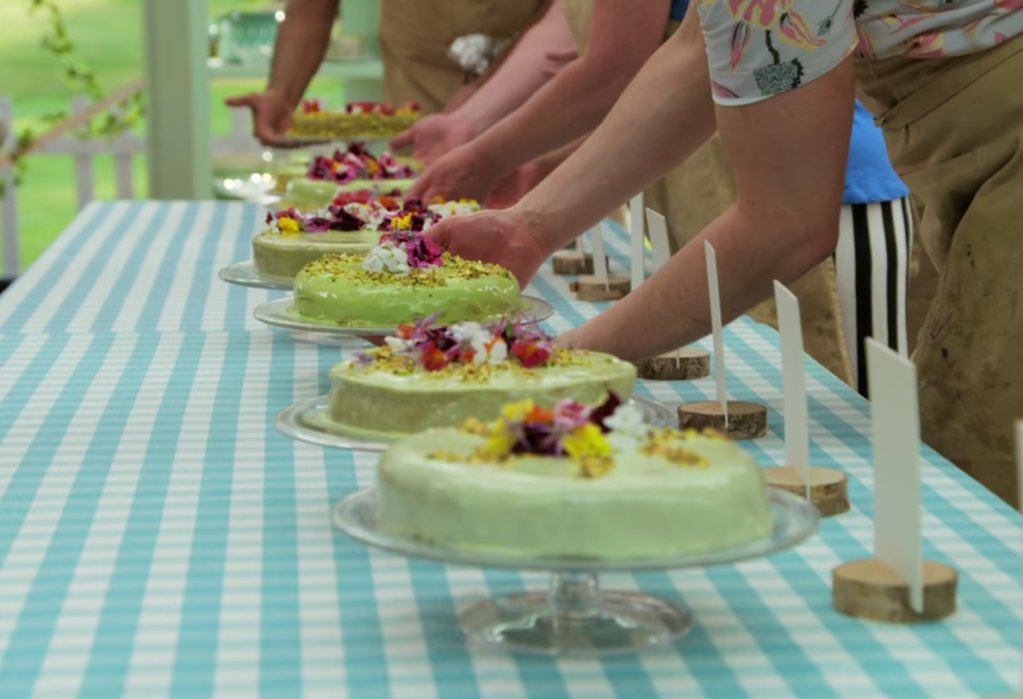
If you’ve ever watched The Great British Bake Off then you’ll know that each week they have a theme which the bakers have to respond to – it might be Bread, Pastry, Desserts…but whatever the theme, they will also have a Technical Challenge. This is when the contestants are given all the ingredients and a very basic recipe and told to make the item in question within the time limit.
The problem is, they may have no idea what it is.
How are you supposed to bake something – and do it properly – if you don’t know what it looks like or how it’s supposed to taste? Invariably contestants are anxiously scanning the room to see what everyone else is doing, to get even the vaguest hint of what they’re supposed to be doing.
I realised today that I think we might be doing the same thing when it comes to these approaches of Human Learning Systems, Relational and Restorative Practice and Social Pedagogy. We’re talking to colleagues, academics and community members and we’re telling them: “This stuff is great! It’s really helpful and it’ll really improve or change how you work!” And then we hand them the equivalent of the Bake Off Technical Challenge recipe sheet, beam at them enthusiastically and assume that they’re somehow going to just ‘get it’.
Spoiler alert: they might not.
The thing about adapting your work style or research approach to something like Social Pedagogy or Restorative Practice is that it kind of helps if you can see it in action. We might use similar words like co-production, collaboration or inclusive, but they can mean different things to different people. What one person sees as collaboration, another might label as engaged consultation. Where one person seeks to be inclusive, another sees unplanned barriers. These things aren’t intentional – staff aren’t trying to exclude or minimise people – but you don’t know what you don’t know? In order to help people understand and adopt these ways of working, we might need to adopt a mentoring & modelling approach, where we bring people alongside so they can learn with us, rather than talking at them a lot and assuming it makes sense?!
The other element to this is one I also only considered this morning, while I was travelling to work. I was listening to Brene Brown’s book Atlas of the Heart (there a great documentary series of the book, hosted by the author, which you can find here.) In the book she talks about emotions and explains that if you only have a limited range of words to describe what you feel, how can you truly understand what’s going on for you, or what you need? She also went on to say that in her work with companies and leaders the one thing which they repeatedly struggle with is emotions – in themselves, in their staff – and how this affects the workplace. Somehow we’ve absorbed this idea that to be ‘professional’ means that you don’t have or show any emotions?? This nonsense. We are emotional beings and our emotions shape our understanding and experience of the world and our place in it.
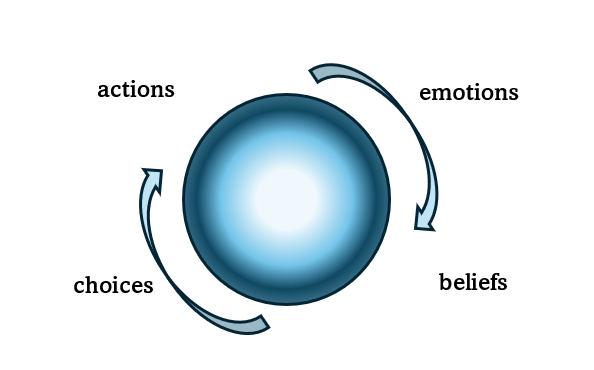
Moreover, our emotions shape our beliefs, which in turn affect our choices and actions. Having emotions is never bad, but it’s what we do about them – how we choose to act as a result of those feelings – which makes the difference.
But how many people know that? How many people have been taught emotional intelligence skills? Are we asking them to take on a new way of working, without considering that there’s a significant skillset which might be missing or assumed, underneath the Technical Challenge Recipe sheet? I think this is something which was implied or assumed, but I think we’re going to need to think about this – both in the HDRC but also in the wider context of person-centred & values-driven practice.
What do you think? Does this ring true for you? Have I missed something? I’d be interested to hear your thoughts 🙂




 Authentic PPIE - the (re)search for authentic engagement
Leave a reply to Changing direction, or broadening the scope? – Authentic PPIE – the (re)search for authentic engagement Cancel reply