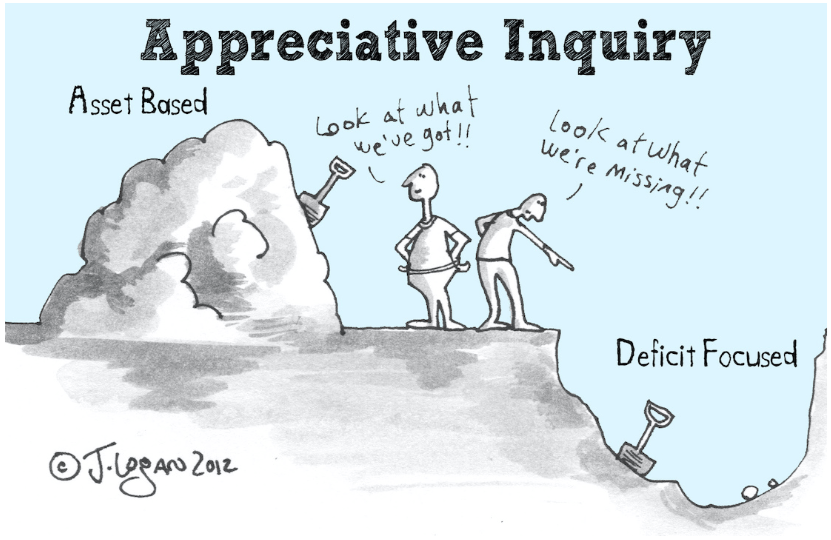
Image: (c) Jeffrey Logan PhD 2012
source: https://www.linkedin.com/pulse/welcome-positive-change-methods-first-what-inquiry-andy-smith/
It’s been an interesting couple of weeks in the world of research. Quietly and without any fanfare, on January 15th, the NIHR (National Institute for Health and Care Research) announced that they were ‘defunding MIPP‘.
For those of you who are less familiar with the public services’ addiction to acronyms (Or A2A for short 😉 ) MIPP stands for Maximising Impact and Public Partnership at NIHR. It was the NIHR department that supported and promoted patient and public involvement in research. Previous to that it was called CED (Centre for Engagement and Dissemination) and before that it was called INVOLVE.
(In this case the MIPP I am referring to is not: the Major Incident Public Portal, the Malaysian Indian People’s Party, or the NHS Medicines Industry Partnership Programme which were other MIPPs I also found online.)
The news of this decision was shared with the MIPP Partnership Panel via a press release on their shared WhatsApp group and it was shared across LinkedIn via practitioners who spotted it online. About a week later, news also emerged that CHAIN (Contact, Help, Advice & Information Network) was also being defunded. CHAIN is an invaluable way of sharing and gathering information about a hugely diverse range of research areas, by specialism.
As the news broke, people in the field were shocked, dismayed, upset and confused. Why was this shared so quietly? How did no-one know about this? What does this mean for people currently involved in PPIE work, or the public contributors who work with them? Practitioners on LinkedIn spoke about the fear of ‘lost skills & learning’. Other people said:
“We’ll have to see what this really means in practice (no one thought the current model was perfect by any stretch). But whatever the reasons for the decision it feels very sad news indeed that we have reached this point.”
“It feels like the carpet being pulled out from under our feet.”
“It was revered as best practice in involvement…Its a very sad day for involvement and PPI. The end of an important era.”
I emailed PPIE colleagues in various settings to ask what they knew, as I’m no longer in this role, but it’s still important to me. One of them replied, commenting:
“It’s hard not to see this as a silencing of voices.”
She went on to say that she’d had a number of conversations with people about both of these cuts (MIPP and CHAIN). She said some are seeing it as a silencing, others as under-rating public voice (not seeing it as essential). From her perspective it seemed that huge cuts were being made across infrastructure services (including HealthWatch and NHS England) which were seen as duplication, without really understanding the implications (and that, she said, is coming from someone who thinks there is a lot of duplication and money could be better targeted!)
I sometimes have a tendency to get cross (mostly inwardly), rant about something and ask questions afterwards, but this time** I felt it was important to take time to understand the broader context and seek out more information about what was behind the decision: was it financial, political or something else?
In the press release the NIHR reiterated a commitment to patient and public involvement: “Maximising impact and public partnerships is everybody’s business at the NIHR and central to everything we do….Maximising impact ensures the public get the best return on the investment in health and care research, driving the uptake of insights from research in policy and practice to improve patient and public outcomes.”
Well that sounds about right, I thought, so why do I still feel unsettled? There was an email address at the end of the press release, so I contacted them and asked if they could provide more detail about the decision. I got a swift reply saying:
“…the PPI workforce across other parts of the NIHR will continue to drive forwards public partnerships, such as the people who work in and with our research infrastructure, programmes and personal awards. The PPI leads in the other parts of the NIHR Coordinating Centre are getting in touch with the PPI workforce in NIHR infrastructure (including HDRCs) to provide reassurance that they will continue to provide support to them and the public contributors who partner with NIHR.“
This sounds reassuring…so why aren’t I feeling reassured?
In the meantime, I’ve been reading all over the place, including a paper on how change works called: “Reflections: In praise of Silent Transformation – allowing change through ‘letting happen’” and I’d recommend reading it!
In the paper, the author, Robert Chia, explains that there are two theories of change: Planned and Emergent. Planned is when you organise change on purpose, and Emergent is when you notice it happening by itself, without any real intentional actions by people – like a more organic, natural development.
He also explained that in reality things are changing all the time: within our bodies on a microscopic level; in our homes, families & relationships as we age and grow and in the wider context of national and international events. We talk about change as if it’s an isolated, contained, one-off happening, whereas in reality, change is happening all the time and when we talk about ‘change management’ what we might actually be describing is ‘stability management’ as we intentionally move from one recognisable context to another.
Let me try and give you an example: let’s say you’re moving house (I did that four years ago). In the run up to ‘moving day’ there’s a lot of planning, packing, finance, decluttering, organising and project management to do. Utilities to be switched off and on; moving vans to book, fees to pay etc…But after moving day, things continue to change and evolve: the new commute to work & school, how you do your regular food shop, what the garden looks like, your bills and so on. And then you might need to do repairs or decorating in the new house…and then maybe there’s a birthday or Christmas so you need to prep for that…and…and…and… Although we describe it as ‘settling in’ or ‘calming down’ implying some kind of stable reality, the truth is that everything continues to change – albeit in a slightly less dramatic, intrusive fashion. Things keep changing – they are always changing…the difference seems to be whether we notice it and how disruptive it might be.
Now, hold that thought in your head, while I try and weave something else in and then we’ll come back to the beginning of the story. We’re going through a ‘thought-plait’ or ‘thought-braid‘ here, but it will all come together in the end 🙂
Today, I went to a training session on Appreciative Inquiry. A good definition of this is: “a strengths-based, collaborative approach to organizational change that focuses on what is working well rather than fixing problems.” It was run by Ideas Alliance and although I’d heard of Appreciative Inquiry before, it was a really good reminder of what it is and how it works.
Essentially, instead of starting by looking at the problems (in a person or organisation) you start by looking at what’s good and what’s working well (their strengths and skills). You then take that as a starting point from which to address anything which isn’t working as well. The Appreciative Inquiry link above takes you to a good two-page summary, although in our session today they also included another ‘D’: Define, which means you take time to really explore the issue, the context and resources before you move on.
Now, let’s come back to our thought-braid and the decision to defund the PPIE dept within NIHR: one of the things which has surfaced for me over the last couple of weeks of reflecting and processing this decision, is that it took everyone by surprise. There was no consultation, no advanced warning, no hint that this was what they were planning to do – and that stands in direct contradiction with their own values and ways of working. On their website it says:
“We are determined that their [the public] perspectives and experiences are heard and acted upon, and that their contributions are valued and recognised.”
“We define public involvement in research as research being carried out ‘with’ or ‘by’ members of the public rather than ‘to’, ‘about’ or ‘for’ them.”
It is still not clear why this decision has been made. There has been no attempt, that I am aware of, to explain the logic behind the choice to defund MIPP or CHAIN. No-one would argue that MIPP was perfect, but in a space where PPIE practitioners are still defending their work and trying to change cultural practices, and where public contributors are still fighting to be heard and be seen as more than a tick-box exercise, the decision to remove this national dept is a real blow. Who will champion PPIE at a national level now? Who will hold the space for practitioners and public contributors? Who will be their champion in a system which still appears to describe PPIE as a function, not a relationship?
The NIHR rhetoric was to do work ‘with and for’ patients and the public, but in practice it has been done ‘to, and for’ them, with no consultation.
Public contributors don’t generally wear rose-tinted glasses. They see the reality of NHS research challenges and opportunities. This would have been an ideal opportunity to implement an Appreciative Inquiry approach to MIPP, working with PPIE practitioners and public contributors to look at what’s working well and build those strengths, whilst addressing the weaknesses. If NIHR had invited those key stakeholders to help explore whatever problem led to this decision, there might have been other solutions which were less disruptive and more pragmatic, drawing on the practical and lived experience of people who actually do the work. It seems ironic to me that researchers and practitioners are told that they must have PPIE embedded in their study design, but when it comes to the NIHR itself, they appear to ignore those principles and present us with a final decision, with no opportunity for input or reflection. This decision to push PPIE support out to the regional groups also presumes a great deal of the regional networks, that they will have capacity to pick up the workload of the national dept.
Chai said in his paper ‘Silent Transformation’ that “large scale, high profile and planned interventions develop a curious propensity for generating internal resistance and reactions that often work to thwart such change actions.” I am curious to see what, if any reaction there is to this similarly scaled decision, from among those working in the field.
I am not in a PPIE practitioner role anymore, but this decision – done ‘to’ people rather than with or for them, has dented my trust in an organisation that says one thing and does another. There is probably a lot more going on behind the scenes than I’m aware of, that might provide some clarity or at least mild reassurance, but in the absence of that information, it has certainly left me with a slightly sour taste in my mouth. Wherever I am working, and whatever role I’m in, I will continue to work in a person-centred values-based way because I know that this is an ethically, morally and pragmatically better way to work with people. It’s just rather disheartening to realise that the organisation which is supposed to be championing this approach, may not value it so much after all.
** Look at me and my personal growth! 😀





 Authentic PPIE - the (re)search for authentic engagement
Leave a comment