
If you’re searching for something, how do you know if you’ve found it? For something like your phone or house keys, that’s pretty straightforward: they’re tangible items – solid, familiar. They have a certain weight or texture and you know pretty much instantly whether the keys in your hand are yours or someone elses.
But what if what you’re searching for isn’t a tangible thing? What if it’s a concept, or a sense? Something intuitive – something you feel in your gut? That’s much harder to quantify, but oddly enough – just like your housekeys, you know whether it feels right.
This is how I feel about the work I’ve been involved in for most of my life. I certainly haven’t had what anyone would call a conventional career; more of a portfolio of different projects and opportunities! I trained as a teacher and a youthworker. I’ve worked as a PA for a National Director and Chief Executive. I’ve worked with young people who were known to the Police and visited a prison in East Germany. I’ve met and worked with members of the House of Lords, Bishops, Canon Chancellors, Consultants in the NHS and more. I’ve chatted with homeless people, adults with learning disabilities and people living with autism. I’ve spent a week in a marquee on a school field with 120 children all yelling the word “moist!” (long story!). I’ve held over 600 children and adults in the palm of my hand as I told them a story in a park in suburban London, and created an origami bag in front of an international audience at a conference in Canada whilst talking about working with community partners.
As a freelancer and as an employee, I’ve had some diverse and amazing experiences. But they all have one strand in common: valuing people. Finding ways to help the person in front of me feel valued, worthy and be treated with dignity.
All the examples listed above have brought me to the place I am now: in the early stages of a research project where I’m trying to make the system I work in, value people better.
This afternoon was a brilliant example of just why this needs to happen: I work in the NHS and I was listening to a webinar where an experienced Pharmacist with over fifteen years of practice was explaining the difficulties she’d had in trying to get her patients to take their medicines regularly. This Pharmacist is a specialist in a particular condition and sees her patients probably more regularly than they see their GP. These people are living with a complex and life-limiting disease, to the extent that many of them choose not to get into a serious relationship or consider children because it wouldn’t be fair to their potential partner when their likely life-expectancy is mid-thirties.
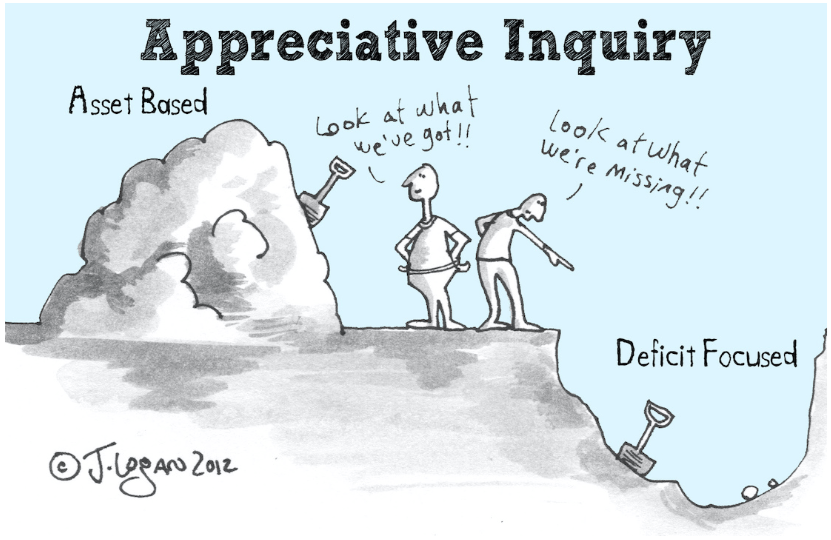
You’d think in these circumstances that people living with this condition would be willing to take any and all medication offered – until you learn that the medicines they’re currently being offered come as tablets and injections and liquids and it takes up to 2 hours to take them all. The Pharmacist admitted: “We’d tried loads of different techniques. I’d looked at all the literature and research papers…but then I realised that I’d been trying to solve the problem from a clinical perspective. I needed the patient’s perspective.”
“I needed the patient’s perspective.”
Even with all her years of knowledge, skills and experience, this hard-working and diligent practitioner had hit a brick wall – because she was asking the wrong questions and looking at the issue from her point of view, not her patient’s point of view.
This is what I want to change within the NHS – starting in public involvement in research. I want to challenge the notion that patient and public involvement and engagement or PPIE, is either a troublesome tick box exercise, or a somewhat indulgent but ultimately pointless exercise because how could a patient possibly know as much as a Consultant? I want to challenge the assumption that good research ideas can only come from researchers and clinicians. I want to shift the balance of power away from one end of the see-saw and move it more towards the middle. I want researchers to understand that the public have knowledge that they don’t; patients and carers have skills, experience and access to resources that we don’t – and unless we make efforts to change the system we’re working in, we’re missing out on really valuable knowledge and insights.
We’re asking the wrong questions.
We’re looking at issues from our perspective, not the patient’s perspective.
A more equitable system, with a balanced methodology underpinning it, enables all of us to benefit from knowledge, skills and experience we can all bring to the table. And this means that everyone around the table can be valued and treated with dignity and respect. That’s not to say that many of my colleagues aren’t already doing this – many of them are, and many of them feel frustrated by the systems they work within.
But I believe small changes can lead to bigger results, and whilst I don’t imagine for one moment that I will solve this problem by myself, I’m very happy to contribute to the snowball which is slowly building momentum…
Hence my search for that intangible something – a methodology for PPIE which sets the boundaries and expectations for how we’re going to work together, in a way which values all knowledge equally and enables PPIE to be truly authentic.
I’m going to be sharing that journey through this blog, talking about my research project and any meetings or travels that I have along the way. After all, it’s not the destination, but the journey that counts.
Care to join me?



 Authentic PPIE - the (re)search for authentic engagement
Leave a comment